
David Armando
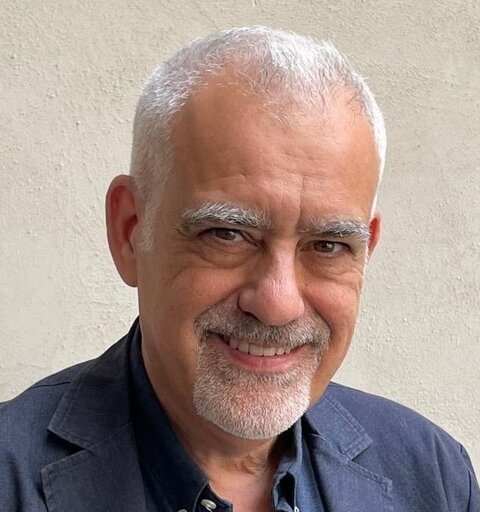

David Armando is a Research Director at the CNR in Italy holding a PhD in European social, economic and religious history. He also an associate member of the Institut d’Histoire Moderne et Contemporaine, and for CéSor (EHESS/CNRS). In 2024-25 he was a fellow at the Paris Institute for Advanced Study.
The project
Title: Magnetic Modernities: Mesmerism and Animal Magnetism in the Long Nineteenth Century
"Animal magnetism, or mesmerism, is the body of cosmological and physiological theories and therapeutic practices developed by the German physician Franz Anton Mesmer. After arriving in Paris from Vienna in late 1778, Mesmer announced to the French public his discovery of a very subtle fluid circulating throughout the universe. He claimed that the obstruction of this fluid was the universal cause of all diseases, and that its action, directed by a magnetizer, could restore health by producing beneficial crises. This essentially materialistic conception and the therapies derived from it sparked great enthusiasm and fierce opposition in France on the eve of the Revolution; they quickly developed in a more psychological direction, as the Marquis de Puységur revealed the extraordinary phenomena of suggestion and clairvoyance produced by “magnetic somnambulism” (later known as hypnosis), and eventually became a major source of inspiration for European science and culture during the Romantic era and beyond. Previously dismissed as an esoteric curiosity or an example of quackery, mesmerism has become a historiographical subject in its own right since the late 1960s, when Robert Darnton highlighted its influence on the formation of pre-revolutionary culture and social life, while Henri Ellenberger identified it as the origin of modern psychotherapies. Drawing on a massive return to original sources, 21st-century historiography has tended to reconsider animal magnetism in its context and analyze it as a complex phenomenon."
Hosting Institution(s): Institut d'Histoire Moderne et Contemporaine (IHMC)
Selective Bibliography
- D. Armando, A. Desmazières (eds), L’Inquisizione dalla Restaurazione a Pio XII (1814-1958). Aspetti istituzionali e prospettive globali, Roma, Viella, 2026
- D. Armando, B. Belhoste, J.-L. Chappey, C. Gantet (eds), Animal magnetism in motion. Reconfigurations and Circulations, 1776-1848 / Le magnétisme animal en mouvement. Reconfigurations et circulations, 1776-1848, Basel, Schwabe, 2025.
- D. Armando, « ‘… les agitations, les hoquets, la contraction des membres…’. Corps en crise et paroles du corp dans les descriptions des cures des premiers magnétiseurs (1779-1786) », in V. Barras, S. Margel, E. Yampolsky (eds), Les corps affectés au XVIIIe siècle. Entre le naturel et le surnaturel, Grenoble, Éditions Jérôme Millon 2025, pp. 115-142.
- D. Armando, « Ancient controversies and modern challenges. The Roman Inquisition and the Eastern Christians in the First Half of the Nineteenth Century », in C. Santus, J.-P. Gay, L. Tatarenko (eds), The Inquisition and the Christian East, 1350-1850, Durham, Durham University Press, 2025, pp. 89-127.
- D. Armando, « Memories and narratives of the Roman Inquisition in the first half of the nineteenth century. Silences, apologies, denunciations », in F.J. Ramón Solans (ed.), Memories of intolerance. Nationalism, Religious violence, and Hate-Speech in Nineteenth-Europe, New York, Routledge, 2024, pp. 130-157.



Alexander Bryson

Simo Mikkonen

Solène Ferreira
