Marie Pierre Ballarin
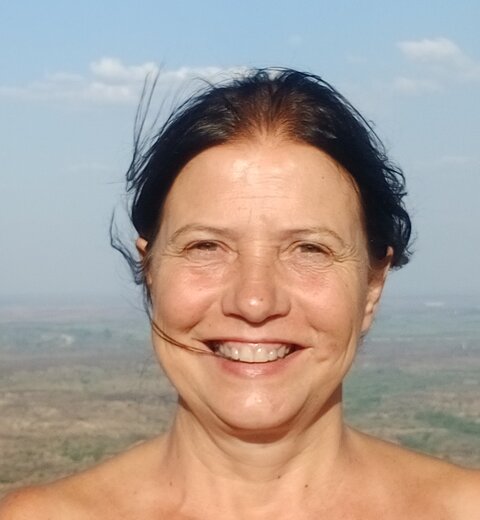

Marie-Pierre Ballarin is a historian and anthropologist, Research Director at the French National Research Institute for Sustainable Development (IRD), and a member of URMIS at Université Côte d’Azur. Specialising in East Africa and the Western Indian Ocean, her research focuses on political rituals, cultural heritage, and local communities. Between 2005 and 2011, she worked in Kenya with the National Museums of Kenya and the Catholic University of Eastern Africa, leading heritage and community engagement projects. She also contributed to the “CORAIL” exhibition at the 2025 United Nations Ocean Conference in Nice, addressing the impact of rising sea levels on cultural heritage. Her current work focuses on strengthening academic partnerships with African institutions and supporting early-career researchers in Africa and Europe.
Project
Title: SWAPERIL
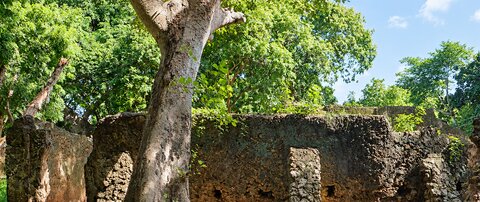
Swahili archaeological heritage along the Kenyan coast is increasingly vulnerable to coastal erosion, sea-level rise, coral reef degradation and growing human pressures. The SWAPERIL project investigates how these threats have developed over time, examining the combined influence of long-term socio-environmental dynamics and colonial and postcolonial legacies on the preservation and management of archaeological sites.
Its central question is how the physical transformation of coastal environments and the historical processes through which archaeological heritage has been studied, valued and protected have shaped present-day vulnerabilities. Focusing on four sites, including Jumba la Mtwana and Gedi, SWAPERIL will combine geoarchaeological investigations, palaeo-environmental reconstruction, remote sensing and marine ecology to document long-term coastal evolution and better contextualise current risks. These findings will be integrated with archaeological and historical archives and interviews with local communities to examine changing heritage practices and perceptions of environmental threats. Through interdisciplinary collaboration between Kenyan and French researchers, the project aims to develop an integrated understanding of coastal heritage vulnerability and inform conservation strategies that address both the protection of archaeological sites and the restoration of marine ecosystems.
Institution: IRD