
Mikheil Elashvili
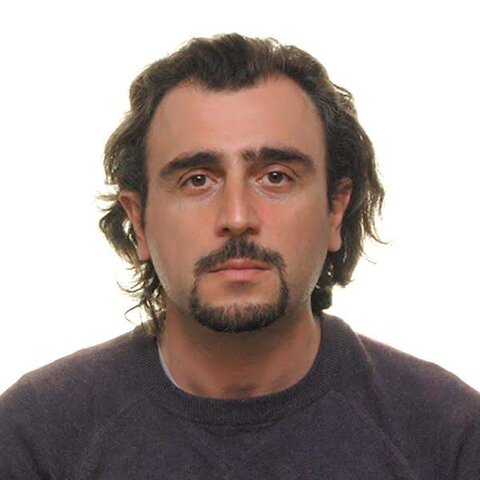

Mikheil Elashvili is Professor of Environmental Studies and Geoinformation Systems at Ilia State University, Georgia, and Assistant Professor at Bridgewater State University, USA. He holds a PhD in Geophysics and his research focuses on paleoenvironmental reconstruction, geoarchaeology, and human–environment interactions in the Caucasus, with a growing focus on GeoAI and spatiotemporal modelling. He directs the Cultural Heritage and Environment Research Center at Ilia State University and leads interdisciplinary studies within the international research consortium Caucasus Crossroads — Climate Change and Culture Connections (7C) he initiated in 2023.
The project
Title: Human-Environment-Historical records of Human Settlement in Historical Colchis, East Cost of the Black Sea – Remote Sensing Approach.
"The historic Colchis on the eastern Black Sea coast of Georgia, the land of the punishment of Prometheus and the destination of the Argonauts in search of the Golden Fleece, underwent dramatic Holocene transformations driven by post-glacial sea-level rise, fluvial sedimentation, and wetland expansion, forming a complex and historically significant coastal landscapes at the border of Europe and Asia.
This project investigates the environmental dynamics and settlement history of historical Colchis, focusing on the poorly understood lower Rioni Plain, Lake Paliastomi region, and adjacent Black Sea coast. The artificial habitation mounds known as Dikhagudzuba were constructed amid marshy terrain from the late 3rd millennium BCE through the Roman period and represent the primary archaeological signature of human adaptation to this challenging environment, yet their full distribution, chronology, and palaeogeographic context remain poorly understood. The location of the ancient Greek city of Phasis, the easternmost hub of Greek colonization and a major trade center between Europe and Asia, also remains unidentified, likely due to dramatic changes in the landscape.
The project integrates three methodological components:
- re-analysis of classical and medieval textual sources and historical cartography to identify spatial references and landscape transformations,
- AI-assisted remote sensing and spatiotemporal GIS modelling to reconstruct the historic landscape of the lower Rioni delta
- assess settlement dynamics in relation to climate and environmental change
The results will advance understanding of human–environment interactions in ancient Colchis and contribute transferable methods for AI-assisted geoarchaeological landscape reconstruction in other data-sparse coastal environments."
Hosting institution: Archéologie et philologie d’Orient et d’Occident (AOROC)
Selective Bibliography
- Helmut Brückner, Mikheil Elashvili, and Hannes Laermanns, "Bronze Age settlement mounds of Colchis - Testimonies of early habitation in western Georgia", in Cultures in the Caucasus, Traces between mountains and steppes, Sabine Reinhold, Arcaeology in Germany, 33, 2025.
- Mate Akhalaia, Mikheil Elashvili, Giorgi Kirkitadze, Mikheil Lobjanidze, Levan Losaberidze and Michael Zimmerman, "New insights into complex social organization in the southern Caucasus Late Bronze Age–Early Iron Age settlement patterns in the Shiraki Plain (southeast Georgia)", E&G Quaternary Science Journal, 73, 2024.
- Helmut Brückner, Rusudan Chagelishvili, Anca Dan, Mikheil Elashvili, Nathaniel Erb-Satullo, Lela Gadrani, Andrei Kurbatov, Hannes Laermanns, Christopher Loveluck, Udo Schlotzhauer, Hans von Suchodoletz, Nino Sulava and Levan Tielidze, "Rapid Climate Change, Integrated Human–Environment–Historical Records and Societal Resilience in Georgia", Sustainability, 16, 7116, 2024.
- Helmut Brückner, Mikheil Elashvili, Daniel Kelterbaum, Giorgi Kirkitadze, Hannes Laermanns, Christopher Loveluck, Simon Matthias May, Revaz Papuashvili, "The Bronze Age occupation of the Black Sea coast of Georgia - New insights from settlement mounds of the Colchian plain", Geoarchaeology, 2024.
- Mate Akhalaia, Mikheil Elashvili, Markus Fischer, Bruno Glaser, Silvan Hoth, Azra Khosravichenar, Giorgi Kirkitadze, Tiiu Koff, Susanne Lindauer, Mikheili Lobjanidze, Levan Losaberidze, Levan Navrozashvili, Rosa Poch, Birgit Schneider, Anna Skokan, and Hans Von Suchodoletz, "Human-environmental interactions and seismic activity in a Late Bronze to Early Iron Age settlement center in the southeastern Caucasus", Frontiers in Earth Science, 2022.



Alexander Bryson

Simo Mikkonen

David Armando
