James Leach
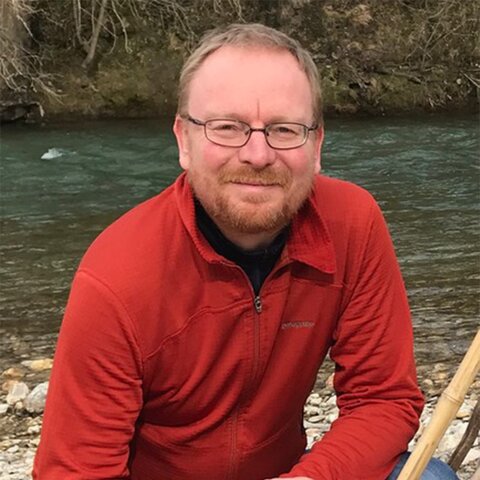

James Leach is a research director in anthropology at the CNRS, working at the Centre for research and documentation on Oceania (Credo) in Marseille, France. He has spent more than four years carrying out fieldwork on the Rai Coast of Papua New Guinea since 1993. His research focuses on environmental knowledge, the multiple implications of the politics of knowledge, creativity, and ecological relations to ‘place’. He has co-authored several respected publications with Indigenous Rai Coast dwellers, including the dual language, open access book Reite Plants and managed multiple grant-supported projects that, in partnership with Indigenous actors on the Rai Coast, developed tools to enable local research participants to document and preserve their heritage. He is the recipient of international prizes for ‘co-creative’ research with Indigenous people, and has held university positions in Cambridge, Aberdeen, and Western Australia before joining the CNRS.
Project
Title: Threats to marine biocultural diversity in the Bismark Sea (Papua New Guinea)
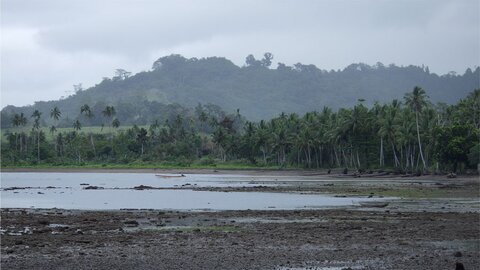
In Oceania, knowledge of coastal and marine environments is indispensable to Indigenous populations for sustaining human and non-human life. The people who live in this island region and the marine environments they inhabit are however under threat from multiple sources of violence including destructive primary resource extraction, sea level change, and loss of biodiversity. Together, these forms of violence are degrading established and functional relations between human societies and the living environment. On all shores of Papua New Guinea’s Bismarck Sea the situation is urgent in this regard, as impacts from sea-level rise, ocean acidification, run-off from mining and logging, and overfishing are already being felt. In the medium term, potential ecological and social consequences of deep seabed mining (DSM) also loom, as “Solwara 1”, the world’s first DSM exploration, is underway there. The research project is focussed in two sites located on both sides of this sea. It applies an anthropological lens to document and understand the threats to coastal societies and marine environments, collaborating with local non-governmental organisations and Indigenous ecological experts. It aims to produce knowledge and educational tools that can be used to mitigate the effects of biocultural degradation.


Aruni Wijewardane

David Bucheli

Gleb Shulpyakov
