Dina Osama Lotfy
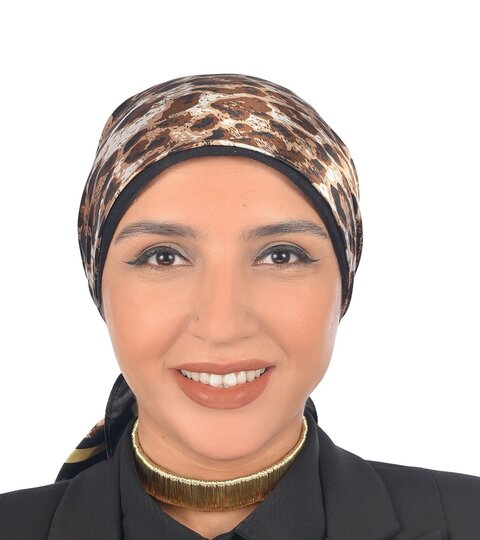

Dina Osama Lotfy is an Assistant Professor of Political Science at Cairo University. Her research focuses on autocratic transitions, religion and politics, and terrorism. She earned her B.A., M.Sc., and Ph.D. in political science from Cairo University. She was a 2025–2026 Global Fellow at the Ansari Institute for Global Engagement with Religion, University of Notre Dame, Indiana, USA. Her work has also been published in several leading international journals, such as Democratization, Government and Opposition, and Politics and Religion. She developed strong quantitative and analytical skills through her participation in the 2022 ICPSR Summer Program in Quantitative Methods for Social Research, held at the University of Michigan– Ann Arbor, United States. She also earned the Best Doctoral Dissertation Award in the field of political science and African studies from the Kemet Boutros Ghali Foundation for Peace and Knowledge, Cairo, Egypt.
The project
Title: Populism, Religion, and the Formation of Theo-Secular Regimes
"My research focuses on two key areas of autocratic transitions and the intersection of religion and politics. The first project, titled “Resisting Autocratization through Undemocratic Means: Saving Democracy or Deepening Autocracy?”, examines the undemocratic tactics employed by opposition groups across different regions, including election boycotts, violent protests, and support for coups d’état. I am particularly interested in understanding the motivations behind the use of these strategies and their outcomes: do they serve to safeguard democracy or further entrench autocracy? This study will analyze nearly 1,000 incidents worldwide, covering the post third wave of democratization period (1990s-2024). The second project, titled “Populism, Religion, and the Formation of Theo-Secular States”, explores the blurred boundaries between religion and secularism in contemporary populist, non-democratic regimes. Focusing primarily on Egypt, the project draws comparisons with other global cases such as Russia, Venezuela, and beyond. I introduce the concept of the "Theo-Secular" state to examine how religious and secular elements coexist and interact within these political systems, challenging conventional dichotomies between the two. This new theoretical model explains the mechanisms populist leaders use to contain religious competition, establish legitimacy in contexts of ideological void, and consolidate their rule. The third project, titled “Religion Clauses in Constitutions and the Prediction of Religious Conflicts”, examines how constitutional references to religion influence a government’s likelihood of engaging in conflicts with societal groups over issues where religion carries high or low salience. The project is based on a cross-national dataset of over 1,000 observations and employs quantitative and qualitative analyses to uncover patterns and correlations between constitutional design and religious conflict."
Hosting institution: Sciences Po
Selective Bibliography
- Dina Osama Lotfy (2025). “Catholic Churches’ Stances toward Electoral Manipulation in the Post-Third Wave Period.” Politics and Religion, 18:3, 408–31.
- Dina Osama Lotfy (2024). “Religious Institutions’ Stances towards Autocratization in the Post-Third Wave Period.” Government and Opposition 59:2, 441–63.
- Dina Osama Lotfy (2024). Religious Markets and Autocratization in Africa. In: Religion and Politics in Africa. African social Research, Volume 4.
- Dina Osama Lotfy (2022). “Institutional constraints and regional incentives for the attempt to scrap presidential term limits.“ Democratization 29:4, 569-590.



Alexander Bryson

Simo Mikkonen

David Armando
