Catherine Larouche
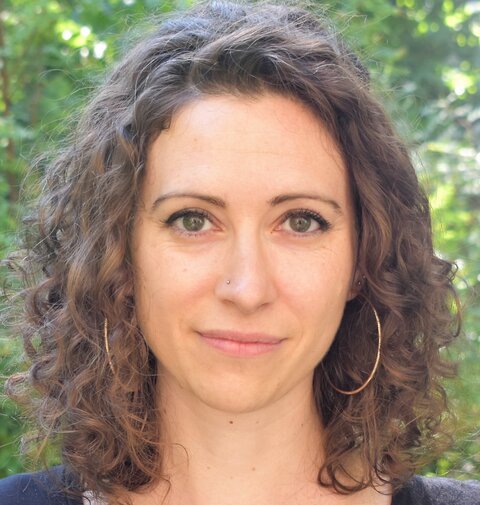

Catherine Larouche is an associate professor in the Department of Anthropology at Laval University in Quebec, Canada, and holds a Ph.D. in anthropology from McGill University. Her research focuses on religious humanitarian traditions in South Asia, with a particular emphasis on Muslim humanitarianism in India. She is interested in informal mutual aid systems, transnational solidarity networks, and the tensions between aid logic and nationalist dynamics in the Indian context.
The project
Title: Religion and humanitarian aid: How minority religious groups shape welfare in India
"Throughout the world, the sanitary measures put in place by governments to curb the COVID19 pandemic have had tremendous social and economic consequences, especially on populations that were already vulnerable. In India, where the informal economy accounts for more than 80% of nonagricultural employment (ILO, 2020), the first lock down announced by the government took a hard toll on those living in precarious financial situation. Within days, dailywage workers, street vendors and domestic workers started running out of food and basic supplies. Such situations have, more than ever, brought to light the strength and weaknesses of various welfare systems, as well as their importance. During this crisis, nonstate,formal and informal, networks of care became particularly visible. In face of the failure of the state to provide aid to all its citizens, numerous citizen initiatives, NGOs and religious groups started providing humanitarian aid and emergency assistance. Studies have shown that in many countries where public welfare is insufficient, such nonstate actors have significant social and economic impact (Cammett & MacLean, 2014; Morvaridi, 2013). This research project focuses on religion and welfare in India. More specifically, its main objective is to examine how nonstate religious actors shape welfare provision in the country, taking the COVID19 crisis as the starting point to address this question."
Hosting institution: Centre d'études sud-asiatiques et himalayennes (Cesah) | EHESS - École des Hautes Études en Sciences Sociales (EHESS)
Selective Bibliography
- 2025, A different development model? Muslim women’s organizations, labour and economic participation in India. Journal of contemporary religion, 40(3), 437–454.
- 2023, Transnational Giving and Evolving Religious, Ethnic and Political Formations in the Global South. Ethnography. Special Issue 24(3) (with Sanam Roohi and Leilah Vevaina).
- 2023, Autonomous care? Muslim transnational giving networks and perceptions of welfare responsibilities in India. Ethnography, 24(3): 389-406.
- 2022, Life after violence in North India: Islamic relief organizations and transactional relationships in a plural humanitarian space. Journal of refugee studies, 35(4): 1452-1471.
- 2022, Citoyennetés et mobilisations en Inde. Anthropologie et Sociétés, 46(1) : 11–24 (co-direction avec Pierre-Alexandre Paquet).



Alexander Bryson

Simo Mikkonen

David Armando
