Carla Rita Palmerino
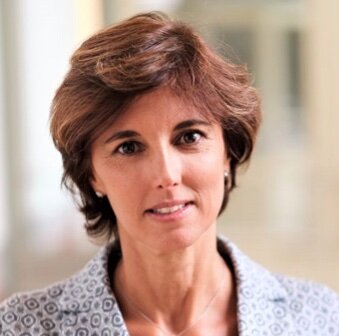

Carla Rita Palmerino studies philosophy at the University of Rome La Sapienza and obtained a PhD in the History of Science from the University of Florence. After her PhD she moved to The Netherlands, where she is now Professor in the History of early modern science and philosophy and director of the Center for the History of Philosophy and Science. Her research focuses mainly on the longue durée history of theories of space, time and matter, and on debates concerning the ontological status of mathematical entities. She is also interested in the epistemic and didactic function of scientific diagrams and of thought experiments.
The project
Title: Exploring motion through thought experiments in the early modern period
"Can an experiment performed only in the "laboratory of the mind" generate new knowledge? This question, also known as 'Thomas Kuhn's paradox', has shaped the debate on thought experiments (TEs) for decades. Some philosophers of science claim that TEs are merely "arguments in disguise", yielding no genuinely new insights but only making explicit what is already implicit in their premises. Others argue that TEs can indeed produce new knowledge by providing "a priori insight" into the nature of the world, by evoking "quasi-sensory intuitions", or by functioning as mental models that allow ideas to be tested. Despite their differences, these accounts share a crucial assumption: that the main purpose of TEs is to generate new knowledge, and in this they may succeed or fail. One can thus speak of 'good' or 'poor' thought experiments. The prevailing emphasis on the heuristic function of TEs has encouraged an ahistorical focus on a few "successful" cases. This project reconceptualizes TEs as historically situated practices and investigates how, in the early modern period, they served simultaneously as conceptual tools for probing ideas and elucidating concepts, as vehicles for the transmission of philosophical and scientific theories, and as debating tools in scientific controversies. Specifically, it examines the role of TEs in the early modern debate on the new science of motion. By reconstructing the epistemic and rhetorical function of Galileo’s thought experiments, the project highlights their dual role: as instruments of reasoning and persuasion, and as vehicles of knowledge that shaped both the formulation of scientific theories and their circulation in the early modern Republic of Letters."
Hosting institution: École Normale Supérieure (ENS)
Selective Bibliography
- C.R. Palmerino, "Tam verba quam diagramma: A Visual History of the Fortune and Misfortune of Galileo’s and Descartes’s Theories of the Tides", in M. Mantovani & D. Cellamare (eds.), Cartesian Imagery: Picturing Philosophy in the Early Modern Age. Leiden: Brill, 2026, pp. 239-272.
- C.R. Palmerino, "Nomi, cose e apparenze: filosofia del linguaggio e filosofia della matematica nel Saggiatore", in Il Saggiatore di Galileo a 400 anni dalla sua pubblicazione (Roma, 23-25 ottobre 2023), Atti dei Convegni Lincei, Roma:Bardi, 2024, pp. 153-172.
- C.R. Palmerino, "Jan Fokkes Holwarda. A Gassendist in Franeker, Between Intellectual Debt and Plagiarism", Erudition and the Republic of Letters, 8 (2023), 378-419.
- D. Bellis, D. Garber, & C.R. Palmerino (eds.) Pierre Gassendi: Humanism, Science, and the Birth of Modern Philosophy New York and London: Routledge, 2023.
- C.R. Palmerino, "From active matter to inertia, from celerity to slowness: the motion of atoms and of compound bodies in Gassendi’s physics". Bruniana & Campanelliana, 28 (1), 183-198.



Patricia Alves Ramiro

Paolo Vineis

María Marta Quintana
