Ecohistory of marine conservation in the Maghreb

How did the EcoHisMa project come about? How does it bring together the humanities and social sciences with marine sciences?
The EcoHisMa network was born out of a desire among researchers in the humanities and social sciences and marine scientists to work together. We all know that we cannot understand the complexity of marine ecosystems and current environmental challenges without pooling our skills, knowledge and resources. We have therefore set ourselves three objectives:
- Firstly, to remind everyone that our relationship with marine environments has a history, and therefore to encourage research to take into account the past of these natural environments, those who live in them and those who live off them, considering both human and non-human actors. Hence the title ‘Ecohistory’.
-
Next, to share knowledge and research practices on ways of studying, preserving and conserving marine resources. The data and research methods we use on a daily basis in our work vary greatly depending on whether we are historians, anthropologists, biologists or ecologists
-
To train young researchers from both sides of the Mediterranean in interdisciplinary practices by organising summer schools, field trips and meetings with fishing professionals and managers
How have colonial fisheries management policies influenced the fishing practices in the Mediterranean basin you are studying?
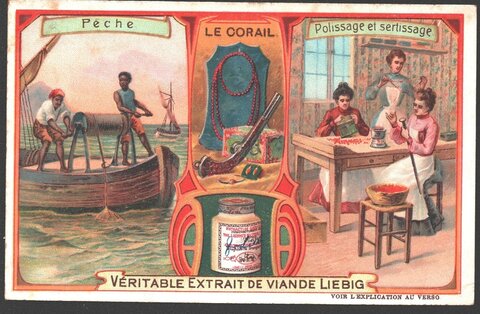
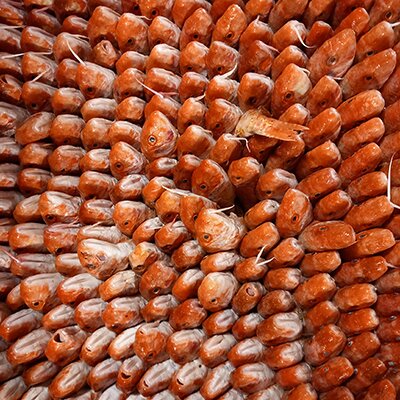
We often forget that marine resources, like spices and slaves, were the driving force behind the first wave of globalisation. This was the case for cod and whales, but also for red coral, which was exploited for centuries by Europeans in Algeria and Tunisia. The resources of the seas and oceans thus played a central role in colonial conquests and the construction of European empires.
In the Maghreb countries, colonisation left a lasting mark on how the sea was exploited, how fish and coral were counted, and how fishing and fish farming activities were organised. Europeans imported with them a set of techniques, legal and scientific standards, but also representations of nature. These were often ill-suited to local realities and ecosystems. Archives and natural history museum collections bear witness to this colonial legacy. They also help us understand the current imbalances between North and South in the management of marine resources. The documentary traces of this shared past still need to be located and explained, which is one of the challenges facing the EcoHisMa network.

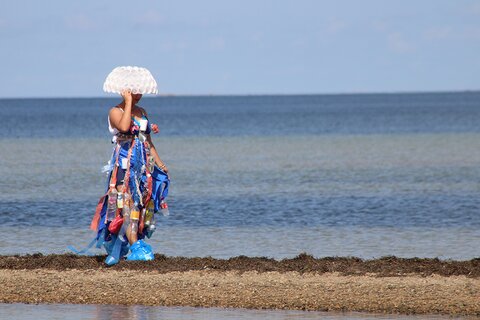
Défilé écologique, 1er Festival des crabes bleus, îles Kerkennah, octobre 2022

Carte Liebig Corail


What are the main challenges you are facing in implementing this interdisciplinary and international project, which aims to bring together the perspectives of North-South and South-South researchers?
At the time of independence, the new states had to cope with many upheavals. They organised themselves as best they could to deal with a number of imbalances: climate change, coastal anthropisation, marine environmental degradation, industrialisation of fisheries, etc. The states on the southern shore of the Mediterranean are now freeing themselves from international tutelage by financing their own programmes, training their own experts and reaffirming their sovereignty over their maritime spaces and resources. All of this now makes it possible to envisage equal relationships that guarantee high-quality scientific exchanges, despite the disputes between our governments.
What are the future prospects for the EcoHisMa project beyond the two years of funding provided by the FMSH?
The network was designed as an incubator for future projects that will help to structure scientific partnerships between France and the Maghreb countries in the longer term. The Maghreb institutions involved in EcoHisMa, whether they are Umifre specialising in the social sciences and humanities or marine biology research centres, are now calling for a breakdown of disciplinary barriers and joint research programmes. Several types of mechanisms exist, such as the CNRS's IRNs (International Research Networks) and bilateral agreements between institutions, which are likely to meet the team's future needs.
The network should also facilitate the signing of agreements on the promotion and digitisation of institutions that have significant documentary resources dating back to the colonial era. We are referring in particular to the CNRDPA library (Algeria-Bou Ismaïl), which holds the archives and naturalist collections of the former Castiglione aquaculture and fishing station founded in 1921, and the INSTM (Carthage-Tunis), where the archives of the former Salammbô oceanographic station are stored.
Winning project for 2024 in the ‘International networks in HSS' Programme
Article published in the third issue of the FMSH Journal.



 Book
Book
Prêter attention. Care, science, psychanalyse

 Journal
Matières, couleurs, supports
 Book
Book
Histoire politique de l'enseignement supérieur
 Book
Book