Reliable sources for studying: Canal-U launches a new campaign

Providing access to trusted scientific resources
Never before has access to knowledge been so easy and widespread. Yet identifying reliable content suited to academic uses has become a major challenge.
This is precisely Canal-U’s mission: to provide open and free access to audiovisual resources produced by the scientific community. Lectures, courses, seminars, documentaries, interviews and podcasts: the platform brings together more than 60,000 resources from higher education and research institutions, across all disciplines.
While Canal-U is already a recognised resource for many institutions and academics, the platform still needs to become better known among new audiences, particularly students. With the tagline "Lost in your research? Start with reliable sources.", the new campaign positions Canal-U as a trusted starting point for exploring knowledge, deepening understanding of a topic or supporting academic work.
A campaign rolled out at the heart of university communities
The campaign relies on several complementary initiatives designed to reach Canal-U's different audiences.
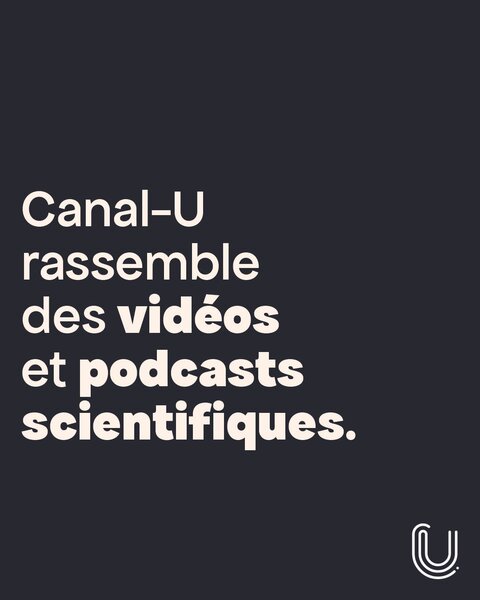
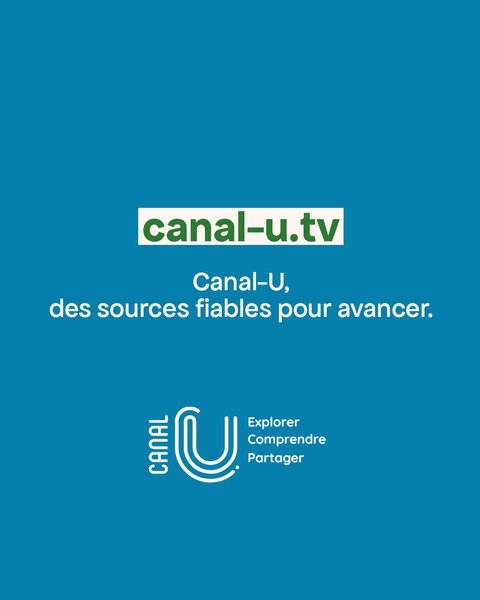
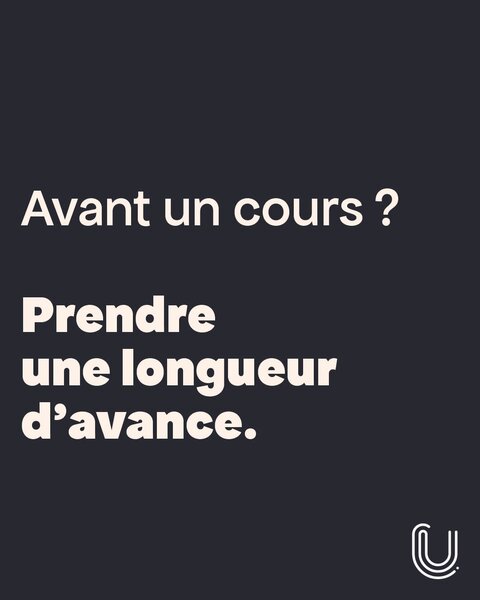
On social media platforms, including Facebook and Instagram, videos and carousels demonstrate how Canal-U can support students throughout their studies: preparing a presentation, revising for an exam, exploring a concept in greater depth or discovering a new field of study.
Teachers and researchers are reached through LinkedIn. Content highlights the opportunities offered by the platform to enrich teaching practices, support students, keep up with scientific developments and showcase audiovisual productions resulting from research activities.
Beyond digital spaces, the campaign is also being deployed across the campuses of the institutions that are members of Campus Condorcet, of which the FMSH is a member. For the first time, it is also reaching university restaurants run by the CROUS in Lyon and Lille, bringing Canal-U directly to students in their everyday environments.










Encouraging new uses of scientific resources
This campaign continues the initiatives launched since 2024 to strengthen the adoption of the platform among university communities. It aims to showcase the different ways Canal-U can be used, whether to support students in their research, revision or academic assignments, or to enhance teaching and research practices.
Resources on the platform can be explored by discipline, institution or speaker. Collections and multimedia dossiers also make it possible to explore a topic through different formats, while personal accounts allow users to save resources, follow channels and create playlists.
By making Canal-U easier to discover, the Fondation Maison des Sciences de l’Homme continues its commitment to knowledge dissemination and open access to scientific resources. It contributes to showcasing a unique audiovisual scientific heritage and encouraging new approaches to learning, teaching and research.

Affiche Canal-U de la campagne de communication 2026
+ 60,000
videos and podcasts
+ 490
institutional channels
+ 33,000
speakers
+ 60
disciplines covered

Created in 2001, Canal-U is the audiovisual dissemination platform for higher education and research.
Supported by the French Ministry of Higher Education and Research and operated by the Fondation Maison des Sciences de l’Homme, Canal-U is the national reference platform for disseminating and promoting French and French-speaking scientific audiovisual productions.
Open to all knowledge-producing institutions, the platform is designed to host, enrich and share video and podcast resources created by the scientific community. Today, with more than 490 channels, 33,000 speakers and 60,000 resources, Canal-U provides free access to a multidisciplinary and extensively documented audiovisual collection, offering new ways to explore and share science.


Pariscience Festival 2026: the FMSH partner for the 8th consecutive year

Canal-U and the FMSH renew their partnership with the Pint of Science festival

Canal-U’s GAMA project selected for the National Fund for Open Science
