Post-war contexts: rebuilding societies
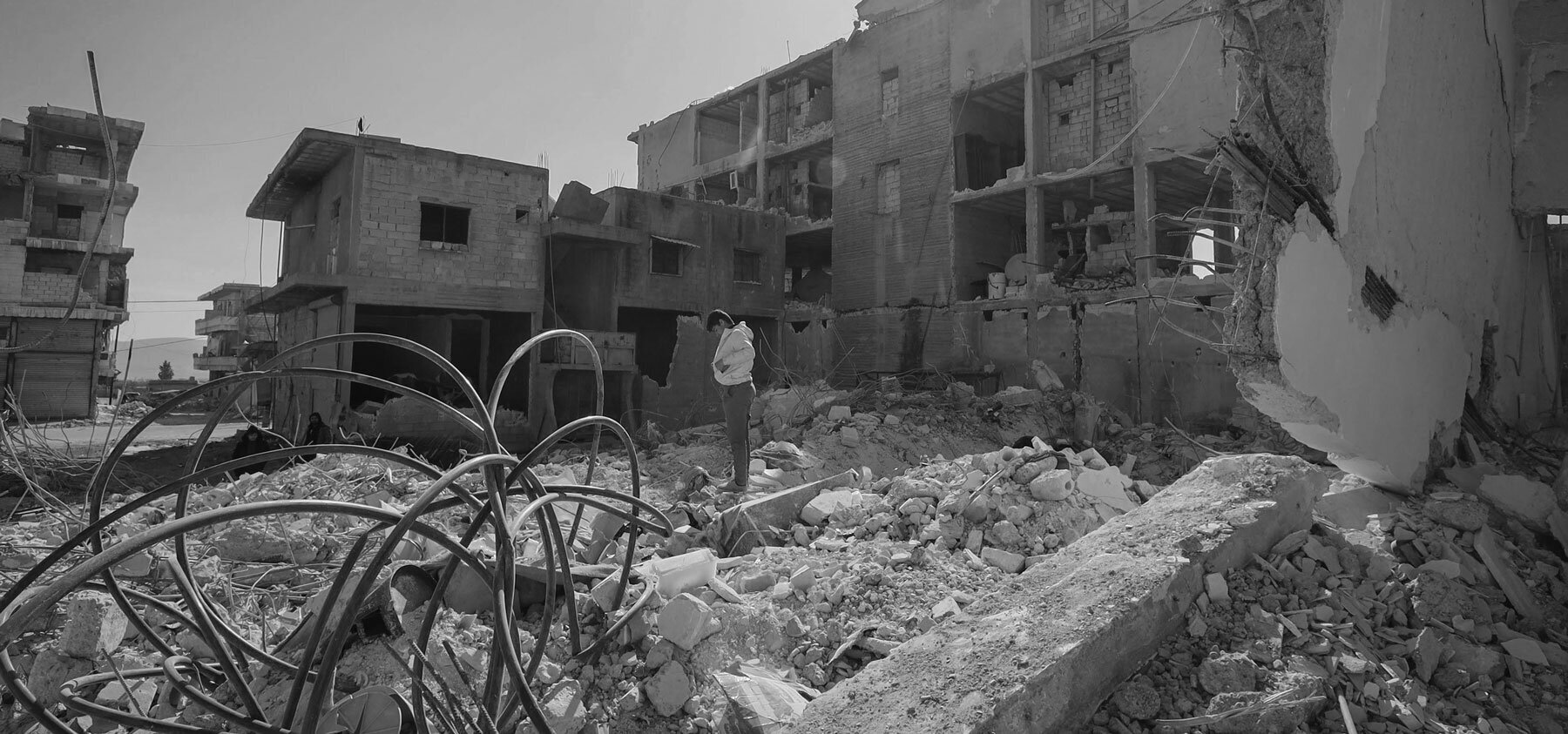
Within this framework, the call for proposals seeks to support research focusing on post-war contexts in the 21st century. Particular attention will be paid to projects that stand out for the originality of their approach, their interdisciplinary dimension, and their collaborations with stakeholders from the economic, social, political and media spheres, as well as their capacity to produce and disseminate knowledge to a broad audience.
For this first edition, the call places special emphasis on the construction of "peace from below", prioritising projects that highlight the role of grassroots movements, as well as cultural, social, media, scientific and economic actors, and diasporas, in post-war contexts and in the reconstruction of the social fabric.
In post-war societies, these actors emerge as key drivers of reconfiguration: they contribute to the expression of social expectations, the definition of public priorities, the circulation of information and the facilitation of public debate, while influencing collective decision-making processes at various levels.
The following areas of inquiry are indicative and non-exhaustive:
- Forms of civic engagement, dynamics of co-construction with institutions, and the conditions for their effectiveness;
- The role and transformation of different actors, including international organisations, within these processes;
- Institutional and democratic reconstruction, particularly in its social, psychological and symbolic dimensions, including initiatives related to the protection or reappropriation of heritage;
- Information dynamics, collective narratives and processes of narrative construction.
The aim of this call is to identify the concrete mechanisms through which grassroots peace actors can become structuring agents of stabilisation, legitimisation, and social and political transformation in post-war contexts.
- Objectives of the call
-
The "Post-war contexts" call for proposals aims to:
- Encourage early-stage projects that develop original and rigorous scientific approaches to post-war dynamics in the 21st century;
- Support interdisciplinary research developed in close collaboration with stakeholders from the economic, social and media sectors and/or journalism, in order to combine expertise and better understand political, social, economic and civic transformations;
- Foster the emergence of projects producing actionable and widely disseminable knowledge, in order to support dialogue between researchers, decision-makers and citizens, and to inform public policy.
- Eligibility criteria
-
The call is open to researchers from all disciplines within the humanities and social sciences.
The principal investigator must hold a permanent position within a French research organisation or higher education institution, which will host the project for its entire duration. Other scientific participants may include doctoral candidates, postdoctoral researchers, or established researchers, based either in France or abroad.
Projects must be at an early stage and led by an international research team working in close collaboration with stakeholders from the economic, social, media and/or journalistic sectors.
- Selection criteria
-
The evaluation and selection of proposals will be carried out by an ad hoc scientific committee, which will pay particular attention to:
- The originality of the research question and methodology;
- The quality of the expected outputs. The project must include:
- A detailed activity report including operational recommendations;
- An innovative mechanism for dialogue between researchers and policy-makers / international organisations / stakeholders from the economic, social and/or media and journalistic sectors;
- A multimedia format designed to facilitate public engagement with the results;
- The international and interdisciplinary dimension;
- The involvement of early-career researchers;
- The participation and engagement of stakeholders from the economic, social, media or journalistic sectors.
- Co-funding from other partner institutions and organisations will be considered an asset.
- Practical and financial arrangements
-
- The financial support is granted for a period of three years;
- The amount of funding ranges from €15,000 to €30,000 per project over the three-year period;
- The funding covers various types of project-related expenses (travel, accommodation, working meetings, workshops, and costs related to multimedia production), excluding staff costs;
- An agreement will be established between the FMSH and the host institution of the project coordinator.
- Support arrangements from FMSH departments
-
Depending on the nature of the projects, their stage of development, and the capacity of the departments involved, successful applicants may engage with various FMSH departments on issues related to dissemination, outreach, and the use of digital tools in research. These exchanges are conceived as a flexible, case-by-case dialogue rather than a standardised or guaranteed set of services.
Indicatively, these exchanges may involve:
- the Media & Science unit;
- the Press Office;
- Éditions de la MSH;
- the Digital & Research unit.
Any support arrangements will be defined progressively, in consultation with the relevant teams, throughout the project.
FMSH departments may support successful applicants in disseminating and promoting their project results:
- The Media & Science unit produces, showcases, and disseminates research through tailored formats such as videos, photography, and podcasts. Where relevant, it may support researchers in developing alternative forms of research communication through image and sound (interviews, reports, photo exhibitions, etc.). Training in video and audio recording may also be offered to enable teams to produce high-quality content.
- The Press Office can support applicants in designing and organising events at FMSH (e.g. a series of talks hosted by journalists), as well as promoting projects to both general and specialised media through interviews.
- Éditions de la MSH can support applicants, from the outset of the project, in reflecting on various formats for dissemination and promotion (publications, mooks, etc.).
- The Digital & Research unit offers tailored support to researchers in selecting digital tools and technologies suited to their projects, such as databases, generative artificial intelligence, and project management solutions.
- Maison Suger, the FMSH residence and research centre for international scholars, may host invited foreign researchers involved in selected projects (for a minimum duration of one month), as well as events and workshops. However, Maison Suger does not host artistic residencies.
Depending on the selected projects, various types of training sessions and interactive workshops may also be offered.
- Application file
-
The application must include:
- A detailed description of the project, drawn up using the form provided for this purpose → project proposal form;
- A provisional budget with a detailed timetable, based on the following template → provisional budget form;
- The CVs of the project coordinator and team members, including publications (maximum three pages per CV);
- A bibliography related to the project.
Please note that applications must be submitted via an online platform. Incomplete applications or those that do not comply with the call will not be considered by the selection committee.
- Obligations of beneficiaries
-
- An interim report will be required at the end of each year, as well as a final report;
- Project teams undertake to come to the FMSH premises to present their work (in the form of a conference, round table, screening, or other format);
- The coordinator also undertakes to inform FMSH in advance of all events organised within the framework of the project.
In terms of communication:
- The FMSH logo must be displayed on all communication materials;
- The financial support of FMSH must be acknowledged in all written and oral communications (programmes, posters, proceedings, documents distributed to participants, articles);
- Beneficiaries undertake to inform the FMSH Communication Department of any major event or activity organised within the framework of the project (conferences, seminars, publications, exhibitions, etc.) with at least two weeks' notice. This prior information will ensure optimal visibility for supported initiatives and enhance their impact among our various audiences.
- Submission process and timetable
-
Applications must be submitted as follows:
- Go to the application platform and access the "Project workspace";
- Log in if you already have an account, otherwise create one;
- Complete your profile under "Project manager contact information", then click on "Create a project";
- Select "Support for scientific projects – 2026 calls";
- Select the call: "Post-war contexts call 2026";
- Complete all sections relating to your project;
- Specify the project coordinator and team members;
- At the bottom of the project page, upload a single PDF document entitled "Post-war contexts call 2026".
Important: any modification made to your application after submission will automatically reset it to 'not submitted' status. Remember to submit it again.
Call opens
27 April 2026
Application deadline
14 September 2026, 17:00 (Paris time)
Announcement of results
December 2026


Themis programme

Atlas: South Mediterranean > France

Atlas: France > Southern countries
