Kirsten Shepherd
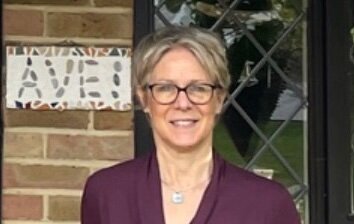

Kirsten Shepherd is a professor of English and Theatre Studies at the University of Oxford and Fellow of St Catherine’s College, Oxford. Educated at Yale University, the University of Oslo, and the University of Oxford. Books published include Ten Minute Book Club : Deep Dives into Short Reads, co-edited with Daniel Abadall and Alexandra Paddock (2026), Plays by Henrik Ibsen and Laura Kieler (OUP, 2025), co-edited with Tzen Sam and Gaye Kynoch, The Cambridge Companion to Theatre and Science (2020), Modern Drama : A Very Short Introduction (2016), Theatre and Evolution from Ibsen to Beckett (2015), Science on Stage (2006), and Ibsen and Early Modernist Theatre, 1890-1900 (1997).
She also founded and runs LitHits, a free weekly newsletter of short, unabridged excerpts from literature. Burning Down the House, a new play based on Kirsten’s research on the true story behind Ibsen’s A Doll’s House, has its world premiere in Oxford in October 2026.
The project
Title: Théâtre and Policy Change
"As a theater historian working primarily on the 19th–21st centuries, I have long been interested in the role that theater has played in helping to bring about not only societal change in a broad, vague, and diffuse sense, but also specific legal and political developments. Although such examples may seem rare, they do indeed exist and are striking. In fact, I am currently writing a book on theater and political change, in which I use concrete case studies to illustrate how theater has brought about, directly or indirectly, legislative changes. My examples come from the United States (the Federal Theater Project’s 1930s productions of *One-Third of a Nation* and *Spirochete*); the United Kingdom (John Galsworthy’s play *Justice*, premiered in 1910, which Winston Churchill saw and which led him, as Home Secretary, to amend the law on solitary confinement of prisoners; I also examine various works on the right to vote); and from South Africa (the role played by Athol Fugard and John Kane in raising global awareness of the problem of apartheid and, ultimately, in dismantling its legal framework). The book will also include an analysis of French theater, which took a very different approach to theatrical censorship than that of Great Britain. This comparison will allow me to show how political change can also occur through the theater. I will take advantage of my stay in Paris to conduct research on the French theater scene and gather examples and case studies for this section of the book."
Hosting Institution(s): Sorbonne Université
Selective Bibliography
- Ten Minute Book Club : Deep Dives into Short Reads, co-edited with Daniel Abadall and Alexandra Paddock (Bodleian Publishing, 2026)
- Oxford World’s Classics edition of three plays : Henrik Ibsen, A Doll’s House, Laura Kieler, Men of Honour, and Henrik Ibsen, When We Dead Awaken (OUP, 2025), translated by Gaye Kynoch and co-edited with Tzen Sam
- “ ‘250,000 Unnecessary Deaths’: Theatricalizing the National Health Care Debate in Broadway’s Medicine Show (1940)” in Medicine as Theatre, Theatre as Medicine, ed. Marlene Goldman, Alice Flaherty, and Lawrence Switzky (Bloomsbury, 2026), 223-44.
- “Modernist Theatre and Science,” co-authored with Daniel Abdalla, in The Cambridge Companion to Modernist Theatre, ed. Brad Kent and David Kornhaber (Cambridge: Cambridge University Press, 2025), chapter 10.
- “Stuffed Bears and Canned Tuna: Staging Animal Extinction through the Material Prop,” co-authored with Hannah Simpson, in Theatre about Science, ed. Mario Montenegro (Coimbra University Press, 2023).
- “Glaspell and Science,” Susan Glaspell in Context, ed. J. Ellen Gainor (Cambridge University Press; 2023)