
Casey Williams
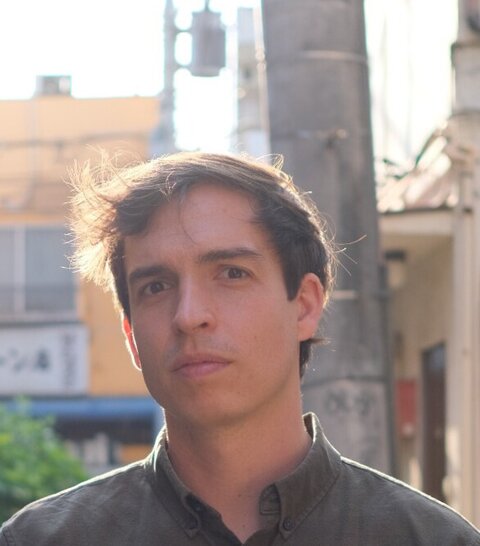

Casey Williams is a Postdoctoral Fellow at Tokyo College, an Institute for Advanced Study at the University of Tokyo. He holds a PhD in Literature from Duke University with a specialization in cultural studies. He is researching scientific and popular discourses of energy transition and climate change, and is writing a book titled Articulating Climate Change: How Capitalism Is Weathering the Climate Crisis.
The project
Title: Climate Change Forensics: Towards a Cultural Theory of Extreme Event Attribution
"This research focuses on 'climate forensics': the scientific and rhetorical techniques used to generate evidence about climate change’s effects and communicate this evidence in legal and public fora. I plan to focus on techniques of 'extreme event attribution' which use climate simulations and counterfactual reasoning to detect the 'fingerprint' of anthropogenic warming on particular extreme events (e.g., heat waves or hurricanes) in order to assign causal, moral, and legal responsibility for losses and damages associated with their effects. I am interested in the ambivalence of these techniques: on the one hand, they furnish evidence that may be used to seek redress for climate change-related damages in courts of law; on the other hand, they foreground the causal influence of climate change over other factors, like neo-colonial trade arrangements or state neglect, that may better explain why extreme weather results in disaster. I also plan to develop previous research on the forensic function of what I call 'climate metonyms'—rhetorical figures used to enlist particular people, places, or events to stand in for climate change as a whole. Following literary theorist Kenneth Burke, I treat metonymy as a 'forensic trope' used to furnish evidence of climate change in public fora. Here I again emphasize ambivalence: metonymic representations of climate disaster can clarify the moral necessity of rapidly reducing emissions; at the same time, they can reduce extraordinarily complex people, places, and events, to their relationship with climate change, obscuring the multiplicity of other meanings they contain. Ultimately, my goal is to better understand how climate forensics, broadly defined, operates as an aesthetic and political practice actively shaping our understanding of what climate change is, what its consequences are, and what can and should be done about it."
Hosting Institution: Collège de France
Selective Bibliography
- "Depoliticizing the Energy Transition: Reflections of the Texas Model" Environment and Planning : Nature and Space (forthcoming)
- "Settler Ecofascism, Fossil Capitalism, and Democratic Crisis" Environmental Communications, December, 2025
- "Who Stands for the Climate? On the Ambivalent Poetics of Contiguity" In The Futurities of Climate Erasures: Climate Change, Storytelling, and Memorialization, Bloomsbury Press (2025)
- "Reading Stuart Hall for the Climate Crisis" The Break-Down, November, 2025
- "The Red and the Green" The New York Review of Books, July, 2025



Aruni Wijewardane

David Bucheli

Gleb Shulpyakov
