Art in helping people living with HIV in Benin

In West Africa, particularly in Benin, there is a tradition of creating embroidered and woven fabrics, which are particularly appreciated by the community. That is why, in our ‘Art and Resilience’ project, we chose to work with textiles to measure the therapeutic impact of such practices on the well-being of the target audience of the RACINES NGO clinic in Cotonou. More specifically, it is intended for people living with HIV, who are still too often marginalised and stigmatised.
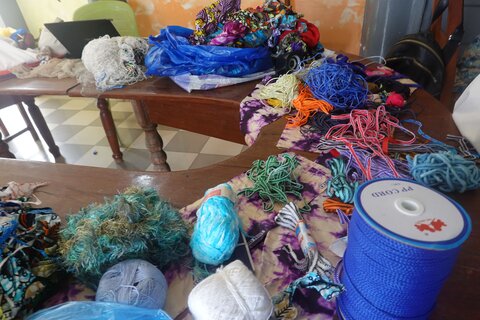
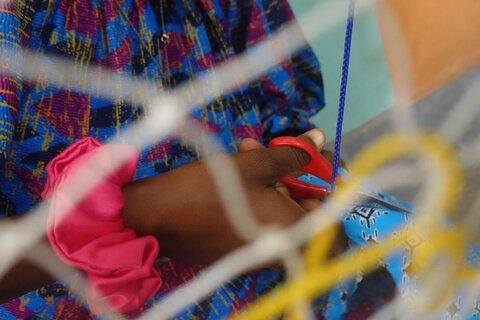
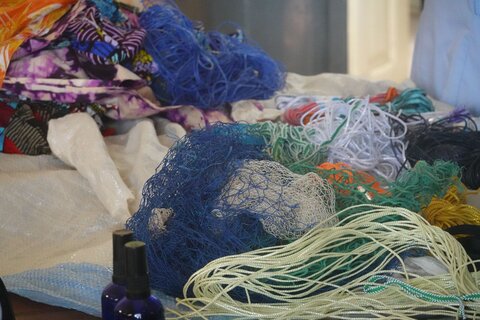
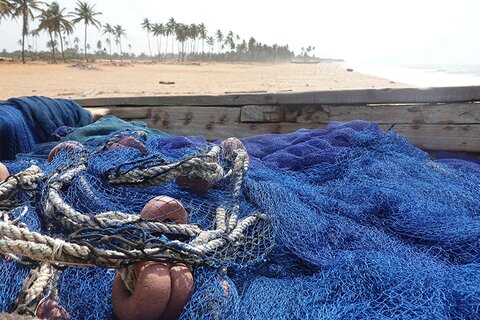
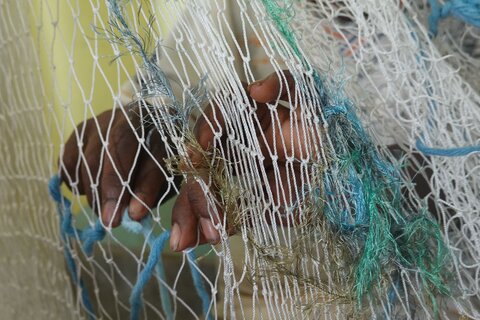
This complementary artistic and therapeutic approach, which I have been using for 20 years, has already proven itself on numerous occasions, particularly with vulnerable populations affected by this type of pathology. The main form of expression proposed uses large fishing nets and brightly coloured fabrics. It gives purpose, initiates and reinforces the therapeutic process. This study explores new forms of expression and reveals other elements than those evoked during the discussion groups currently held at the institution
Inspiring dreams is at the heart of this practice.
This artistic and therapeutic approach involves the body. It uses the senses, touch and tactile, olfactory and auditory sensations. Through the use of numerous fabrics, threads and ribbons, participants gradually let go and get in touch with their emotions.
Like the back-and-forth motion of a weaver's shuttle, a movement takes place between physical sensations and psychological movements. Offering itself as a journey, this work takes shape from hand to hand and allows difficulties to be transcended. Over the course of the sessions, participants become producers by engaging in this creative process and are also recipients of their own creation by observing the progress of this individual and group “weaving”. Inspiring dreams is at the heart of this practice.
We aim to highlight that the therapeutic effects are beneficial for participants' social integration, mental balance, mood, and joie de vivre, and transform how others view their humanness. Special attention is given to the production of the final collective work, which then becomes a space for boosting self-esteem. This 4-metre-long mesh created by the participants during these workshops will be exhibited at a presentation to be held at the Zinsou Foundation for Contemporary Art in Cotonou.


Winning project for 2024 in the ‘Arts’ programme
Article published in the third issue of the FMSH Journal.



 Book
Book
Prêter attention. Care, science, psychanalyse

 Journal
Matières, couleurs, supports
 Book
Book
Histoire politique de l'enseignement supérieur
 Book
Book