Of stars and peoples

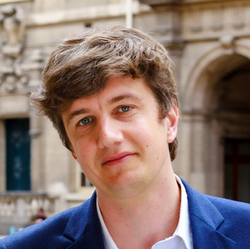
Victor Gysembergh is a research director at the CNRS and a specialist in the history of ancient science and philosophy. His work focuses in particular on the transmission and interpretation of astronomical knowledge in ancient sources, including an edition of the fragments of Eudoxus of Cnidus in the Collection des Universités de France (Budé). He is currently leading the ERC PALAI project, dedicated to the study of Greek and Latin palimpsests using multispectral imaging, opening up new insights into scientific texts that have long been inaccessible.
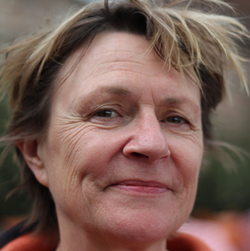
Sylvie Nony is an associate professor of Physics and wrote her thesis on the controversies surrounding the physics of motion in the Middle Ages. Published under the title Variations in Motion: Abû al-Barakât, a Physicist in Baghdad (6th–12th Centuries) (ed. IFAO, Cairo, 2016), her work explores developments in the science of motion in the medieval Arab world and the various interpretations of the legacy of Greek antiquity. The history of science, too often focused on seeking continuity between these two periods, has at times neglected the bold innovations on this subject and related topics such as time, space, the void, and the infinite... Arab science not only transmitted the Greek heritage but also profoundly renewed its approaches in many fields.
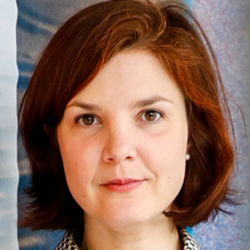
Pauline Zarrouk is a cosmologist at the CNRS and works at the Laboratory of Nuclear and High-Energy Physics (LPNHE) at Sorbonne University. She coordinates the DESI (Dark Energy Spectroscopic Instrument) project for the CNRS, which aims to map the sky by measuring the positions of tens of millions of galaxies in order to better understand the composition and dynamics of our Universe, and in particular its current phase of accelerated expansion. Pauline Zarrouk is also deeply involved in science communication and is committed to sharing our cosmic history with an ever-wider and more diverse audience. Pauline Zarrouk’s work has just been recognised with the CNRS Bronze Medal.
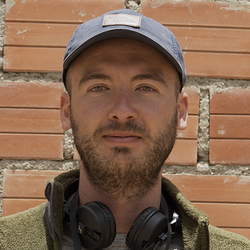
Boris Wilmart is a documentary writer, director and editor. His films explore the connections between humans and nature, seeking to convey visual and emotional depth in each one. For several years, he has taken a particular interest in astronomy, questioning our relationship with the cosmos and the way in which it influences our lives and our perception of the world. He has developed this line of thought through several short films, and more recently with the documentary series Marche à l’étoile (2021–2024), produced for ARTE and Ushuaïa TV.
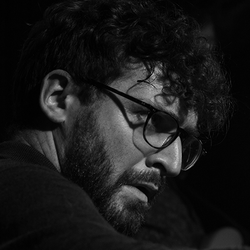
A drummer, bassist, composer, and a freelance performer, Anaël Noury is a member of several groups specialising mainly in modern jazz. Computer-assisted music, musical accompaniment for storytelling, and writing music for live performance are other aspects of his work as a composer.
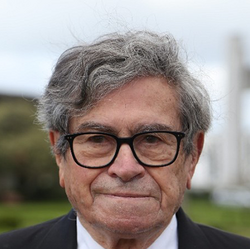
François Bellec is a rear admiral, a member and former president of the French Naval Academy, and a former director of the National Maritime Museum. A historian specialising in exploration, scientific voyages and the art of navigation, he has published some thirty books, including A Universal History of Navigation (Volume 1: The Star Discoverers ; Volume 2: From Stars to New Celestial Bodies).
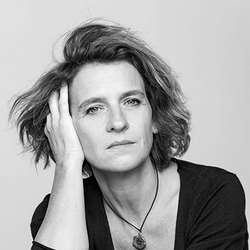
Karine Mazel has been a storyteller since 1995. For her, storytelling is a way of sharing the great questions of humanity.
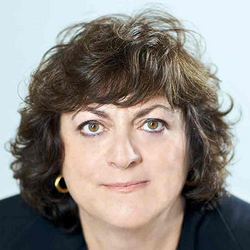
Dominique Leglu is president of the French Association for the Advancement of Science (AFAS), having previously served as editorial director of the monthly science magazine Sciences et Avenir and the quarterly La Recherche, and as a columnist for Challenges magazine. A physicist by training and author of several books, including ‘Supernova’, which focuses on the famous SN1987A—the first supernova explosion visible to the naked eye in the 20th century—she has overseen the translation of numerous works for Robert Laffont, including those by Brian Greene (The Fabric of the Cosmos) and Leonard Susskind (The Black Hole War). She was awarded the 1990 Jean Perrin Prize by the French Physical Society.
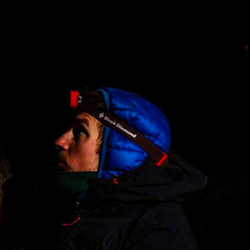
After studying art and design, Stephen Rater undertook a series of long-distance treks in Spain, Iceland and New Zealand, before embarking on a formative solo trip to Nepal in 2014. It was there, whilst improvising an astronomy lesson at a mountain school, that he decided to combine adventure with scientific outreach for good. Since 2018, he has made astronomy his main occupation, organising stargazing camps in the forest and supporting people affected by cancer through the Siel Bleu group. Subsequently, his expeditions to Nepal, Kyrgyzstan and South America to share stargazing with local communities were the subject of documentaries produced with Boris Wilmart and broadcast on Ushuaïa TV and Arte. To support these charitable projects, the Marche à l’étoile association was founded. It is now spearheading its most ambitious project: the construction of a permanent astronomical observatory in the Mustang region of Nepal, to provide sustainable access to astronomy for communities in the Himalayas.

End-of-life plastics: a geography of waste

When the City Encroaches on the Coastline

Le désir d'avant-garde
