
Francisco Prado-Vilar
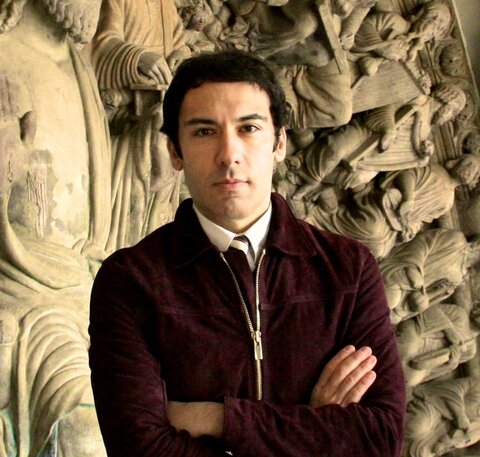

Francisco Prado-Vilar is Distinguished Researcher at the University of Santiago de Compostela, and research fellow at the CISPAC (Inter-University Research Center for Atlantic Cultural Landscapes) in Santiago (Spain). He received his PhD from Harvard University and subsequently held teaching and research positions at Princeton, University of London, Complutense University in Madrid, and was visiting professor at Stanford. Before joining the University of Santiago, he was Director of Projects at the Royal Complutense College at Harvard. For the past few years, he has been involved in several projects focusing on the study and preservation of cultural heritage, serving as member of the panel of the European Heritage Label (EHL), and as coordinator of the scientific committee overseeing the restoration of the Portal of Glory of Santiago Cathedral, where he led a multidisciplinary team of art historians, architects, and conservation scientist funded by the Mellon Foundation.
His research and publications focus on diverse aspects of the arts of medieval and early Modern Europe, covering topics of wide chronological, thematic, and methodological range, such as: the afterlife of Antiquity; the intercultural relations among Christians, Muslims, and Jews; the interconnections between medievalism and modernity; photography and the archaeology of archives; intermediality, cognition, and the lives of objects in the Anthropocene; historical memory and the restitution of cultural heritage.
The project
Title: Medieval Choirs as Performative, Acoustic and Cognitive Environments: Archaeological Investigation and Digital Reconstruction of the Choirs of Notre-Dame de Paris and Santiago Cathedral
"The research constitutes an advanced phase in an ongoing collaboration between the project KosmoTech_1200: Experience, Cognition, and Technology in Historical Built Environments – which explores the intersection of artistic creation, sensory experience, and technological mediation around the pivotal horizon of the year 1200, taking as its principal case study the medieval choir of Santiago Cathedral – and two leading research groups working on the cathedral of Notre-Dame de Paris. These include, on the one hand, the archaeological and art-historical teams of the Chantier scientifique de Notre-Dame (Projet Collectif de Recherche “Jubé de Notre-Dame de Paris,” CNRS–INRAP), and, on the other, the musicology and acoustics teams at Sorbonne Université (Institut Jean le Rond d’Alembert). Within this framework, the project undertakes a comparative investigation of the medieval choir as a performative, acoustic, and cognitive environment, bringing into dialogue the twelfth-century choirs of Santiago Cathedral and Notre-Dame de Paris. Our understanding of both ensembles has been profoundly transformed over the past three years, following major archaeological discoveries at both sites, which have prompted renewed study and the development of comprehensive programmes of fragment cataloguing, conservation, and digital reconstruction."
Hosting institution: Sorbonne Université
Selective bibliography
- F. Prado-Vilar (ed.), The Portal of Glory: Architecture, Matter and Vision (Madrid, 2020)
- F. Prado-Vilar, “The Crystal Codex: Iacobus, Galicia, and the Dream of the Archive,” Journal of Medieval Iberian Studies 14.3 (2022): 501-28.
- F. Prado-Vilar, “Herod and the Orant Queen: The New Archaeological Discoveries in the Cathedral of Santiago, and Its Medieval Stone Choir,” Codex Aquilarensis 38 (2022), pp. 217-254.
- F. Prado-Vilar, “The Marble Tempest: Material Imagination, the Echoes of Nostos, and the Transfiguration of Myth in Romanesque Sculpture,” in Icons of Sound: Voice, Architecture and Imagination in Medieval Art, ed. Bissera V. Pentcheva (New York: Routledge, 2020)
- F. Prado-Vilar, “The Superstes: Resurrection, the Survival of Antiquity, and the Poetics of the Body in Romanesque Sculpture,” in Transformatio et Continuatio – Forms of Change and Constancy of Antiquity in the Iberian Peninsula 500-1500, ed. H. Bredekamp and S. Trinks (Berlin and Boston: De Gruyter, 2017),
- F. Prado-Vilar, “The Awakening of Endymion: Beauty, Time, and Eternity in Romanesque Sculpture and Its Photographic Afterlife,” Codex Aquilarensis 35, Special issue: Beauty, Persuasion and Rhetoric in Medieval Art (2019), pp. 223- 51.


Find out more about the Maison Suger

Alexander Bryson

Simo Mikkonen

David Armando
